
Retail Conversion Rate: What It Is and How to Improve It
Introduction
Your fashion store generates £80,000 in weekly sales. That sounds excellent—until you learn a competitor down the street does the same with half the foot traffic.
The difference? Conversion rate. One store converts 8% of visitors to buyers; the other converts 15%.
Retail conversion rate is one of the most critical metrics in business, yet many retailers don't measure it accurately. Without knowing your true conversion rate, you can't:
- Understand store profitability
- Identify operational bottlenecks
- Benchmark performance against competitors
- Attribute improvements to staffing, layout, or marketing changes
- Make informed decisions about inventory or expansion
In this guide, we'll explain what conversion rate is, why it matters, how to calculate it accurately, and how to improve it systematically.
What Is Retail Conversion Rate?
Retail conversion rate is the percentage of store visitors who complete a purchase.
Simple Definition: Out of 100 people who enter your store, how many buy something?
This metric bridges the gap between marketing (which drives foot traffic) and sales (which completes transactions). A store that attracts 1,000 visitors weekly but only has 50 transactions has a 5% conversion rate. A store attracting 500 visitors with 75 transactions has a 15% conversion rate—significantly outperforming the first despite lower traffic.
Why Conversion Rate Matters More Than You Think
Many retailers fixate on revenue and transaction counts. But conversion rate reveals operational efficiency.
Two stores, same revenue:
| Store | Weekly Visitors | Weekly Transactions | Average Transaction Value | Conversion Rate |
|---|---|---|---|---|
| Store A | 2,000 | 150 | £533 | 7.5% |
| Store B | 1,200 | 150 | £800 | 12.5% |
Both earn the same revenue (£80,000). But Store B does it with 40% fewer customers. This means:
- Fewer marketing costs needed to reach target revenue
- Less pressure on the store's capacity and staffing
- Higher profit margins (lower customer acquisition cost)
- Happier customers (less crowded)
- More scalable business model
Conversion rate reveals which store has a fundamentally better business.
The Retail Conversion Rate Formula
Measuring conversion rate requires two data points: visitors and transactions.
The Basic Formula
Conversion Rate (%) = (Total Transactions ÷ Total Visitors) × 100
Example:
- 1,500 visitors in a week
- 225 purchases completed
- Conversion rate = (225 ÷ 1,500) × 100 = 15%
Important Variables
What Counts as a Transaction?
This seems obvious but creates confusion in practice:
- Count: Each separate purchase, regardless of value
- Don't Count: Items returned (they reduce conversion)
- Decision Point: Some retailers count customer headcount if multiple items purchased by one person; others count items sold. Use one approach consistently.
What Counts as a Visitor?
- Count: Anyone entering the store
- Don't Count: Passersby who just look in the window (requires actual entry)
- Edge Case: Staff, vendors, building security—exclude these from counts
Time Period
Calculate conversion rate for consistent periods:
- Daily (easiest for real-time monitoring)
- Weekly (smooths out daily variation)
- Monthly (reveals seasonal trends)
- Annual (benchmark performance)
Why Accuracy Matters
A 1% difference in conversion rate compounds dramatically:
- 1,500 monthly visitors at 5% conversion = 75 transactions
- 1,500 monthly visitors at 6% conversion = 90 transactions (+20% revenue with same traffic)
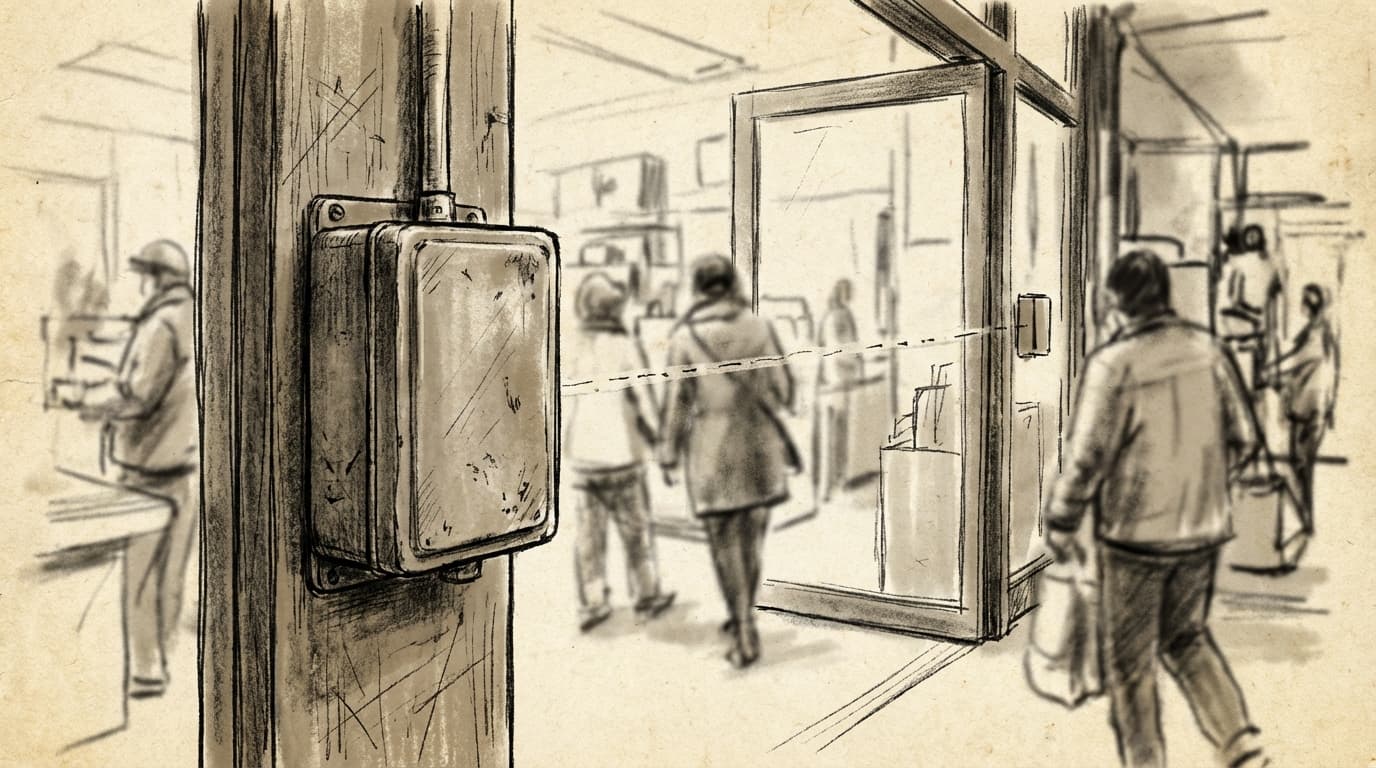
Inaccurate footfall counting directly distorts conversion rates. If your system undercounts visitors by 20%, your conversion rate appears artificially high, masking operational problems.
Why Most Retailers Get Conversion Rate Wrong
Problem 1: No Footfall Data
The most common mistake is calculating "conversion" using only POS transactions, without counting actual visitors.
Example:
"We had 300 transactions last week, so our conversion rate is... 30%?"
This is meaningless. Without knowing visitor count, transaction volume tells you nothing about conversion efficiency.
Problem 2: Inaccurate Footfall Counts
Even with footfall systems, accuracy matters:
- Infrared beams undercounting by 20-30% during peak hours make conversion rates look artificially high
- Manual counting creates inconsistent data
- WiFi tracking capturing only 40-50% of visitors skews the picture
A store that actually converts 10% of visitors appears to convert 12-15% if the footfall counter undercounts by 20-30%.
Problem 3: Inconsistent Definitions
Some retailers include:
- Online orders fulfilled by store staff (don't include—this is e-commerce conversion, not retail)
- Gift card sales (arguably yes, as they're revenue, but be consistent)
- Service-based sales (hair salons, alterations) differently than product sales
Without clear definitions, conversion rates are incomparable month-to-month or store-to-store.
Problem 4: Not Accounting for Returns
Returns reduce conversion rate. A store with 100 transactions but 15 returns has only 85 valid conversions.
Net Conversion Rate = (Transactions − Returns) ÷ Visitors × 100
Problem 5: Ignoring Seasonality
Converting 12% in December (Christmas shopping surge) is different than 12% in February (quiet season). Compare:
- Same month year-over-year (controls for seasonality)
- Same season (spring 2024 vs spring 2023)
- Year-to-date rolling (smooths monthly variation)
Problem 6: Using Point-in-Time Data
One week of 10% conversion doesn't mean your store converts 10%. Measure across:
- Full months (minimum)
- Seasons (quarters)
- Full years (best practice)
Conversion rates naturally fluctuate week-to-week based on staffing, weather, events, and other variables.
Industry Benchmarks by Sector
Conversion rates vary dramatically by sector. Fashion boutiques expect different conversion than grocery stores.
Fashion & Apparel
Average Conversion Rate: 20-25%
- Luxury fashion: 15-20% (lower traffic, higher selectivity)
- Fast fashion: 25-35% (high traffic, lower average transaction value)
- Department stores: 18-22% (mix of browsers and serious shoppers)
Why Fashion Converts Relatively High: Fashion is discretionary but impulsive. A visitor who enters is often considering a purchase.
Grocery & Supermarket
Average Conversion Rate: 40-50%
- Premium/organic: 35-45% (higher selectivity)
- Value/discount: 45-55% (high traffic, lower cost, more likely to buy)
- Convenience stores: 50-60% (small basket, quick transaction)
Why Grocery Converts Highest: Customers enter with intent. They're shopping for specific needs.
Electronics & Technology Retail
Average Conversion Rate: 10-15%
- Large format (Best Buy, Currys): 8-12%
- Specialist electronics: 12-18%
- Mobile phone shops: 15-25% (contract-based sales, high intent)
Why Electronics Converts Low: High consideration purchase. Visitors browse, research, compare. Many plan to buy elsewhere.
Luxury & Jewelry
Average Conversion Rate: 15-20%
- High-end jewelry: 10-15% (very selective)
- Designer goods: 12-18%
- Luxury watches: 15-22%
Why Luxury Converts Lower: High price, long decision cycles. Many visitors are browsing; few ready to commit.
Beauty & Cosmetics
Average Conversion Rate: 25-35%
- Prestige beauty (Sephora): 28-35%
- Pharmacy beauty: 30-40%
- Specialist skincare: 25-32%
Why Beauty Converts High: Customers enter with category intent. Browsing within category often converts to purchase.
Home & Furniture
Average Conversion Rate: 8-12%
- Large format (IKEA): 12-18% (lower price, impulse-friendly)
- High-end furniture: 5-10% (long decision cycle)
- Homeware/décor: 10-15%
Why Furniture Converts Low: Long consideration, high price, delivery logistics. Many visits are research-focused.
Sports & Outdoor
Average Conversion Rate: 18-25%
- Equipment specialists: 15-22%
- Apparel-focused: 22-30%
Why Sports Converts Moderate: Mix of impulse (apparel) and planned purchases (equipment).
Pharmacy & Health
Average Conversion Rate: 35-50%
- Prescription-focused: 45-55%
- Health & wellness: 30-40%
Why Pharmacy Converts High: Customers often enter with specific need. Prescription fills drive traffic.
Bookstores
Average Conversion Rate: 20-28%
- Independent bookstores: 22-30%
- Large format: 18-25%
Why Books Convert Moderate: Browsing culture (visiting for exploration), but browsers often buy.
The Five Key Strategies to Improve Conversion Rate
Improving conversion rate doesn't require increasing foot traffic—it means converting more of the traffic you already have.
Strategy 1: Optimize Staff Scheduling and Training
The Problem: Customers arrive to find long queues or unhelpful staff. They leave without buying.
The Solution:
- Track peak hours: Use footfall data to identify when traffic peaks (usually lunch hours, evenings, weekends)
- Schedule accordingly: Place your best, most experienced staff during peak hours
- Reduce wait times: Long queues are conversion killers. Ensure staffing prevents checkout queues of 3+ customers
- Train for conversion: Teach staff to:
- Greet customers warmly
- Ask qualifying questions ("Looking for something specific?")
- Suggest relevant items
- Handle objections effectively
- Close sales confidently
Typical Impact: +3-5% conversion rate improvement (a 10% uplift)
Strategy 2: Optimize Store Layout and Merchandising
The Problem: Customers can't find what they want. Key products are buried or poorly displayed. They leave frustrated.
The Solution:
- High-conversion zones: Place your highest-margin products at eye level and near entry points
- Logical flow: Customers should navigate intuitively. Confusing layouts frustrate shoppers
- Visual merchandising: Attractive displays stop browsers and convert them to buyers
- Product information: Clear pricing, sizing, and material information removes purchase hesitation
- Impulse categories: Near checkout, place items that encourage last-minute additions (beauty, snacks, accessories)
Typical Impact: +2-4% conversion rate improvement
Strategy 3: Improve the In-Store Experience
The Problem: Poor Wi-Fi, unclear signage, slow checkout, cramped aisles, uncomfortable temperature. These friction points reduce conversions.
The Solution:
- Minimize friction: Self-checkout, digital payment, quick fitting rooms, clear signage
- Create comfort: Adequate lighting, temperature control, music, seating areas if appropriate
- Clean and organized: Visual clutter and untidy displays discourage purchase decisions
- Offer amenities: Mirrors, shade, refreshment areas (jewelry stores offer seating; outdoor stores offer shelter)
Typical Impact: +2-3% conversion rate improvement
Strategy 4: Align Inventory with Demand
The Problem: Popular items are out of stock. Customers leave empty-handed. You're overstocked on slow-moving inventory.
The Solution:
- Track footfall by product: Use heat maps or zone-level counting to see which products attract browsing
- Compare to sales: Do high-traffic products convert to high sales? Or are they attracting browsers only?
- Stock accordingly: Ensure bestsellers are well-stocked; reduce slow movers
- Avoid empty shelves: Nothing kills conversion like "out of stock on our top item"
Typical Impact: +3-5% conversion rate improvement (through better stock visibility and availability)
Strategy 5: Leverage Data-Driven Marketing and Promotions
The Problem: You run promotions hoping to boost sales, but you don't measure if they increase foot traffic or just discount existing customers.
The Solution:
- Measure lift: Track daily footfall before, during, and after promotions. Did the promotion increase visitors?
- Calculate efficiency: If a promotion increased visitors 20% but conversion dropped 10%, was it worth it? (Yes, net +8% transactions)
- Test strategically: A/B test promotions on different days/locations, measure impact on both footfall and conversion
- Optimize timing: Some promotions attract browsers (low conversion); others attract buyers (high conversion). Test and learn
Typical Impact: +1-2% direct conversion improvement, +5-15% indirectly through strategic promotions
Why Accurate Footfall Data Changes Everything
Without accurate footfall measurement, improving conversion is guesswork.
The Problem with Incomplete Data
Consider a store that increased transactions from 150 to 165 per week (+10% growth). Management celebrates. But:
- If foot traffic also increased 15%, conversion actually declined from 7.5% to 7.15% (a negative trend)
- If foot traffic increased only 5%, conversion improved from 7.5% to 8.25% (a genuine improvement worth celebrating)
Without accurate visitor counts, you can't tell the difference.
How Accurate Data Enables Improvement
With accurate footfall:
- You identify that staff during peak hours are understaffed (footfall increases but conversion drops)
- You realize a new product placement reduced conversions (footfall same, transactions down)
- You measure that a £2,000 marketing campaign increased visitors 8% but with no conversion improvement (consider halting)
- You see that removing a product category freed up space, slightly decreasing footfall but significantly increasing conversion per visitor
Accurate data drives better decisions.
Calculating True Conversion Rate
To calculate accurate conversion rate:
- Implement accurate footfall counting (AI camera or thermal imaging, minimum)
- Track transactions consistently (ensure POS accuracy and return accounting)
- Establish baseline (measure for 4 weeks before changes)
- Set targets (improve conversion 1-2% annually is realistic)
- Measure impact of any changes to staffing, layout, merchandising, or promotions
Benchmarking Your Store
Calculate Your Current Conversion Rate
Track for a full month:
Week 1: 320 visitors, 48 transactions = 15.0% conversion
Week 2: 285 visitors, 39 transactions = 13.7% conversion
Week 3: 410 visitors, 62 transactions = 15.1% conversion
Week 4: 295 visitors, 39 transactions = 13.2% conversion

Monthly Average: 1,310 visitors, 188 transactions = 14.3% conversion
Compare to Your Sector
Is 14.3% good? Depends on your industry:
- Fashion: YES (average 20-25%, but 14.3% is improving)
- Electronics: YES (average 10-15%)
- Grocery: NO (average 40-50%, suggests major issues)
- Furniture: EXCELLENT (average 8-12%)
Set Improvement Targets
A realistic goal: improve conversion by 1-2% annually.
- Current: 14.3%
- Year 1 target: 15.3% (+1 percentage point, +7% uplift)
- Year 2 target: 16.3% (+2 cumulative points, +14% uplift)
Common Conversion Rate Pitfalls to Avoid
Pitfall 1: Obsessing Over Total Transactions Without Conversion Rate
A store increasing transactions 20% year-over-year without tracking conversion rate might actually be declining. You only know with footfall data.
Pitfall 2: Not Accounting for Seasonality
Conversion rates spike in December (holiday shopping) and dip in summer (vacation season). Compare year-over-year same months, not March vs. December.
Pitfall 3: Blending Online and In-Store Data
Online conversion rates (2-5% typical) distort in-store benchmarks. Calculate separately.
Pitfall 4: Not Testing Changes Properly
Changing staffing, layout, or products without measuring impact on conversion makes it impossible to learn what works. Measure before and after each change.
Pitfall 5: Ignoring Customer Segments
Your conversion rate for new customers likely differs from repeat customers. If footfall data can segment, track conversion by segment.
Conclusion
Retail conversion rate is the metric that separates thriving stores from struggling ones. It's the answer to: "How efficiently does my store convert browsers into buyers?"
Without accurate footfall data, you're flying blind. With it, you can:
- Benchmark performance against industry standards
- Identify which operational changes actually improve performance
- Set realistic improvement targets
- Calculate marketing ROI accurately
- Make data-driven staffing and inventory decisions
Start by measuring your current conversion rate accurately. Then use the five strategies above to improve it systematically. A 1-2% annual improvement compounds into a dramatically more profitable business.
Call to Action
Ready to measure and improve your conversion rate?
Download the Free Retail Conversion Rate Calculator – instantly see your conversion rate, benchmark against your sector, and identify improvement opportunities.
This free tool includes:
- Conversion rate calculator (input visitors and transactions)
- Industry benchmark comparison by sector
- Conversion improvement scenarios (see impact of 1%, 2%, 3% improvements)
- 30-day conversion tracking template (monitor daily improvement)
- Checklist: 10 quick wins to improve conversion
[Download Free Calculator] and start optimizing your conversion rate today.
Or [Schedule a 15-minute conversation] with our retail analytics experts to discuss how accurate footfall data can improve your store's performance.
Hoxton Analytics provides AI-powered footfall counting and retail analytics. We help stores measure true conversion rates and optimize performance with accurate, actionable data.